
Run this in AIHR BD instead of a spreadsheet
NBR-compliant payroll, ZKTeco & Hikvision attendance sync and bKash/Nagad salary disbursement — 14-day free trial, no credit card required.
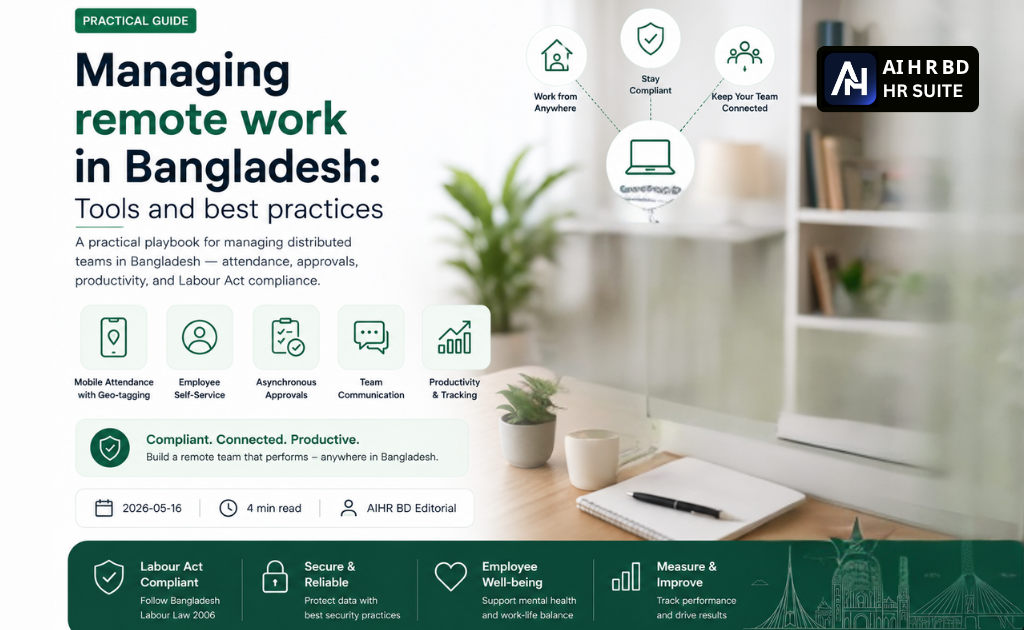
Remote work has quickly evolved from a temporary workaround to a core operational model for many Bangladeshi businesses, particularly in IT, agencies, and BPOs. Successfully managing a distributed workforce demands the right combination of technology, clear policies, and strict adherence to the Bangladesh Labour Act.
Key takeaways
- Implement a robust HR tech stack, including mobile attendance with geo-tagging, ESS portals, and asynchronous approvals, for efficient remote operations.
- Ensure all remote work policies strictly comply with the Bangladesh Labour Act regarding working hours, overtime, and leave.
- Prioritize clear communication and provide appropriate tools to maintain productivity, foster collaboration, and ensure team cohesion.
- Focus on data security, employee well-being, and continuous training to support a sustainable remote work environment.
Building your remote work tech stack
A thoughtfully selected suite of tools is fundamental for effectively managing a remote workforce. These technologies ensure accountability, streamline HR processes, and keep employees connected and productive.
Essential HR and communication tools
- Mobile Attendance with Geo-tagging: Critical for verifying attendance of remote employees. Solutions like AIHR BD allow staff to clock in/out via their smartphones, with GPS coordinates confirming their designated work location. This functionality integrates seamlessly with time tracking and productivity systems.
- Employee Self-Service (ESS) Portal: Empowers employees to autonomously manage HR requests, such as viewing payslips, applying for leave, and updating personal information, thereby significantly reducing the HR department's administrative load.
- Asynchronous Approval Workflows: Indispensable in remote settings, these systems enable managers to approve requests (e.g., leave, expense reports, timesheets) without requiring real-time interaction, preventing delays and bottlenecks.
- Communication Platforms: Tools such as Slack or Microsoft Teams facilitate instant messaging, video conferencing, and file sharing, crucial for maintaining collaborative workflows.
- Project Management Software: Platforms like Asana, Trello, or Jira help teams track tasks, deadlines, and project progress, ensuring everyone remains aligned and focused on shared objectives.
Ensuring Bangladesh Labour Act compliance
Even when employees work remotely, the provisions of the Bangladesh Labour Act, 2006 (and its subsequent amendments), remain fully applicable. HR teams must meticulously adhere to:
- Working Hours: Clearly define standard working hours and monitor them as diligently as for in-office staff.
- Overtime Regulations: Ensure all overtime hours are accurately tracked and compensated according to legal requirements.
- Leave Policies: The accrual and utilization of annual leave, sick leave, and casual leave must strictly adhere to the Act's stipulations.
- Health and Safety: While more complex for remote settings, employers retain a duty of care. This includes advising on and, where feasible, supporting an ergonomically sound home office setup, and ensuring access to mental well-being support.
Implementing clear, written policies on remote work is not just good practice; it is crucial for legal compliance. For detailed insights, refer to our guide on designing remote and hybrid work policies that actually work.
Enhancing productivity and engagement
Maintaining high productivity and keeping remote teams engaged requires deliberate effort and strategic implementation.
Strategies for fostering a productive remote environment
- Clear Expectations: Define unambiguous job roles, responsibilities, and performance metrics. Employees must understand what is expected and how their performance will be evaluated.
- Regular Check-ins: Schedule consistent one-on-one meetings and team huddles to discuss progress, address challenges, and foster a sense of connection.
- Performance Monitoring: While avoiding micromanagement, utilize performance tracking tools to measure output and provide constructive feedback. Focus on outcomes rather than mere activity.
- Training and Development: Provide opportunities for skill development relevant to remote work, such as training on digital collaboration tools or time management workshops.
- Feedback Mechanisms: Establish accessible channels for employees to provide feedback on their remote work experience, enabling continuous adaptation of policies and support.
Data security and privacy in remote work
Remote work environments inherently introduce new cybersecurity risks. Protecting company data and ensuring employee privacy are paramount.
Key security measures
| Security Aspect | Action |
|---|---|
| VPN Usage | Mandate Virtual Private Network (VPN) use for all employees accessing company resources to encrypt data traffic. |
| Endpoint Security | Ensure all company-provided devices have up-to-date antivirus software, firewalls, and regular security patches. |
| Access Control | Implement strong password policies, multi-factor authentication (MFA), and role-based access to sensitive data. |
| Data Backup | Establish robust data backup and recovery procedures to prevent data loss. |
| Employee Training | Regularly educate employees on cybersecurity best practices, phishing awareness, and safe data handling. |
Supporting employee well-being
The isolation inherent in remote work can significantly impact mental health. Organizations must proactively support the well-being of their remote employees. This is particularly important for managing HR across multiple branches, where oversight can be challenging.
- Flexible Work Arrangements: Where operational feasibility allows, offer flexibility in working hours to help employees balance personal and professional commitments.
- Mental Health Resources: Provide access to counseling services, employee assistance programs (EAPs), or mindfulness resources.
- Promote Digital Detox: Encourage employees to switch off after work hours and take regular breaks to prevent burnout and promote mental recovery.
- Virtual Social Activities: Organize online team-building activities, virtual coffee breaks, or social events to foster camaraderie and reduce feelings of isolation.
- Ergonomic Advice: Offer practical guidance on setting up a comfortable and ergonomically sound home workspace to prevent physical strain and improve comfort.
Related reading
Frequently asked questions
- How can I legally track remote employee attendance in Bangladesh?
- Use mobile attendance with geo-tagging, so employees clock in and out from their smartphones with their work location confirmed. This keeps accurate records of working hours as required by the Bangladesh Labour Act 2006 and supports correct compensation calculations.
- What digital tools are essential for managing a remote workforce in Bangladesh?
- Essential tools include mobile attendance with geo-tagging, an employee self-service portal, and asynchronous approval workflows for HR tasks. Communication platforms such as Slack or Microsoft Teams and project tools like Asana or Trello keep distributed teams connected and productive.
- Does the Bangladesh Labour Act 2006 apply to remote employees regarding working hours and overtime?
- Yes, the Act applies fully to remote employees for working hours, overtime, and leave. Employers must track and compensate overtime according to legal requirements and ensure annual, sick, and casual leave accrual follows the Act. Clear written policies are essential.
- What measures should a Bangladeshi company take to secure data when employees work remotely?
- Mandate VPN use for company resources and keep endpoint security updated on all devices. Enforce strong passwords, multi-factor authentication, and role-based access to sensitive data, and run regular training on phishing and cybersecurity basics.